
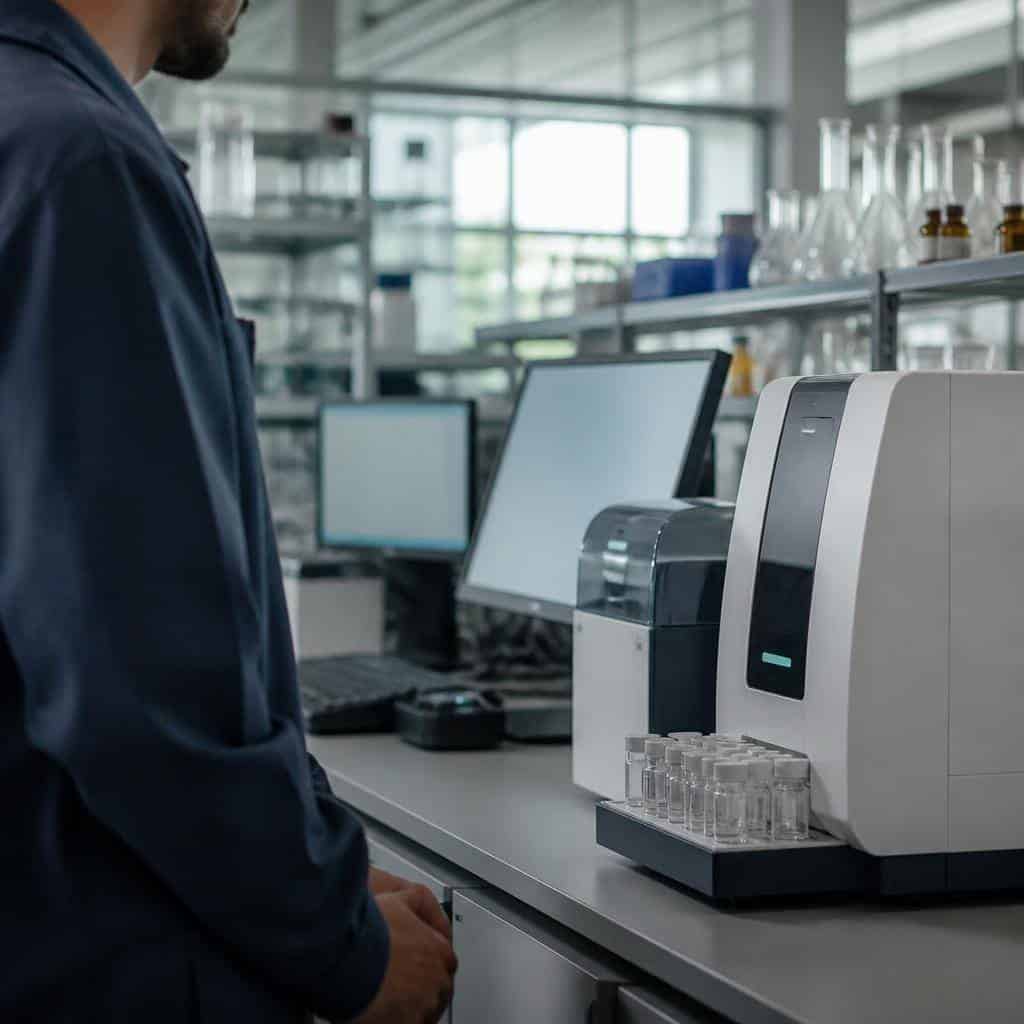
The anion test plays a crucial role in various industries by measuring negatively charged ions that impact product quality, environmental safety, and equipment performance. As businesses increasingly rely on precise ion measurement to maintain standards and prevent contamination, understanding the future potential of anion test technology becomes vital for decision-makers seeking accuracy, reliability, and adaptability in their operations.
How Anion Test Technology Benefits Business Operations
In many sectors such as pharmaceuticals, water treatment, food processing, and electronics manufacturing, anion tests provide essential data on ionic content. This data helps companies control raw material quality, optimize production parameters, and ensure compliance with safety regulations. The technology enables businesses to detect harmful ions like chloride, nitrate, and sulfate early, preventing costly product recalls or environmental violations.
Advanced anion test systems now offer faster detection times, improved sensitivity, and greater automation capabilities, which reduce human errors and labor costs. These improvements translate directly into more efficient workflows and higher confidence in quality assurance processes.
Key Criteria for Selecting Anion Test Solutions
- Accuracy and Sensitivity: The ability to detect low ion concentrations reliably is essential for industries with strict purity requirements.
- Speed of Analysis: Faster testing cycles help maintain production throughput without delays.
- Ease of Integration: Compatibility with existing laboratory or production equipment smooths implementation.
- Cost and Maintenance: Long-term operational costs, including consumables and calibration, influence the total cost of ownership.
- Data Management: Systems that support digital records and reporting enable streamlined compliance and traceability.
Emerging Trends Shaping Anion Test Development
Looking ahead, the anion test field is evolving with innovations that focus on miniaturization, enhanced selectivity, and real-time monitoring. Portable testing devices are becoming more common, allowing businesses to conduct on-site measurements without sending samples to centralized labs. This shift accelerates decision-making and reduces downtime.
Integration with Internet of Things (IoT) technology enables continuous tracking of ion levels in production lines or environmental systems, triggering automated adjustments or alerts when thresholds are exceeded. Such smart capabilities promise more responsive and efficient operations.
Moreover, new sensor materials and detection methods are being researched to improve durability and lower costs, which could make high-precision anion testing accessible to a broader range of businesses.
Addressing Common Challenges in Implementation
- Calibration Stability: Regular calibration is necessary to maintain accuracy; future devices aim to extend calibration intervals.
- Sample Preparation: Simplifying or automating sample handling reduces operator variability and speeds up testing cycles.
- Environmental Factors: Temperature and humidity can affect test results, so devices with built-in compensation mechanisms are gaining ground.
- Training Requirements: User-friendly interfaces and automated procedures lower the learning curve for technicians.
Practical Use Cases Enhancing Business Efficiency
In water treatment plants, routine anion tests monitor contaminants to ensure compliance with drinking water standards. Rapid detection helps operators adjust treatment chemicals promptly. In food and beverage production, tracking anion levels prevents off-flavors and ensures product consistency.
Electronics manufacturing benefits from anion test technology by verifying ultra-pure water used in semiconductor cleaning processes, where trace ionic impurities can cause defects. Also, pharmaceutical companies use these tests to maintain strict formulations and validate cleaning processes.
To explore specialized solutions that cater to these diverse applications, businesses can find expert support and tailored services focusing on the anion test at reliable providers. For example, accessing anion test resources from anion test specialists offers detailed insights into advanced methodologies and industry-specific requirements.
What the Future Holds for Anion Test Technology
As regulatory demands tighten and product complexity grows, the importance of precise ion monitoring will increase. The future anion test platforms are expected to emphasize user-friendly operation combined with high-performance analytics.
Automated, smart anion test systems integrated with digital platforms will support predictive maintenance and quality control, minimizing risks and reducing resource waste. Businesses that adapt to these technologies early can expect smoother compliance processes and improved operational transparency.
Ultimately, the continual evolution of anion test technology responds directly to business needs for accuracy, speed, and integration, positioning it as a cornerstone in quality assurance across multiple industries.